Mind the Gap: How to Align Your Values and Your Life

When Something feels off
Is it time to Reflect, Reconnect, and Realign yourself?
Try self-mentoring with two tools and one updated fillable PDF to get started.
Every so often, often at the start of a new year or on a quiet Sunday evening, a familiar thought shows up.
When something feels off. Not wrong enough to panic. Not bad enough to complain about. Just off enough to linger in the background while you carry on with your day.
When that happens, it may be time to slow down and reflect on what your life is trying to tell you.
You might even be doing fine by most measures. Work is okay. Life is full. You are functioning. From the outside, things look reasonably together. And yet there is a low-level sense that you are pushing through life rather than moving with it.
That feeling is more common than people admit. And it is rarely a sign that something is wrong with you.
It is usually a sign that something important is out of alignment.
That is where two simple but powerful tools come in. The Life Wheel and the Values Bridge.
Here is the idea that connects them.
The Life Wheel shows where life feels off.
The Values Bridge explains why.
Once you see that, things begin to make sense.
With the Updated Life Coaching Guide, I created a fillable PDF so you can get to work instantly. This new version also includes tracking the results of the Values Bridge so you can consolidate and consider your findings later or in discussion with your coach or mentor.
Why Life Feels Off Even When Things Look Fine
One of the most confusing experiences is feeling dissatisfied with no obvious reason.
You might think:
• I should be happier than this
• Nothing is actually wrong
• Other people have it worse
So you push the feeling aside and carry on.
But that quiet sense of friction does not disappear. It usually presents as low energy, irritability, boredom, or a vague sense of restlessness. Not dramatic enough to demand attention. Persistent enough to drain you over time.
This is where reflection becomes more useful than motivation.
Using the Life Wheel to See What’s Not Working

Get the full story and your copy of the Life Wheel Worksheet here
The Life Wheel is a simple snapshot of how your life feels right now. It looks at key areas such as work, health, relationships, finances, personal growth, fun, and contribution. I created and started using this tool to expand on life coaching sessions back in 2005. I created this wheel along with a review of my annual theme to create focus and set my roadmap for the year ahead. I have a full article and the free worksheet for you to delve into later.
You rate each area based on your current experience, not on where you want it to be or where you think it should be.
Then you connect the dots.
Sometimes the wheel looks fairly balanced. Other times, it looks like it would struggle to roll in a straight line. That is not a failure. It is information.
The Life Wheel highlights things like:
• Where energy feels low
• Where satisfaction is thin
• Where you are coping rather than thriving
Low scores are not a judgment. They are signals asking for attention.
What the Life Wheel does very well is to help you consider what areas of your life you want to improve. Which I feel is very helpful. But it doesn't explain why things are the way they are.
What the Life Wheel Reveals About Balance and Satisfaction
When people first see their Life Wheel, the instinct is often to fix the lowest areas.
• Try harder
• Improve habits
• Add structure
• Push through
Sometimes that helps. Often, it just creates more pressure.
You can improve routines and still feel disconnected. You can be productive and still feel flat. You can be busy and still feel like something important is missing.
That usually means the issue is not effort. It is alignment.
Why Fixing the Problem Often Doesn’t Fix the Feeling
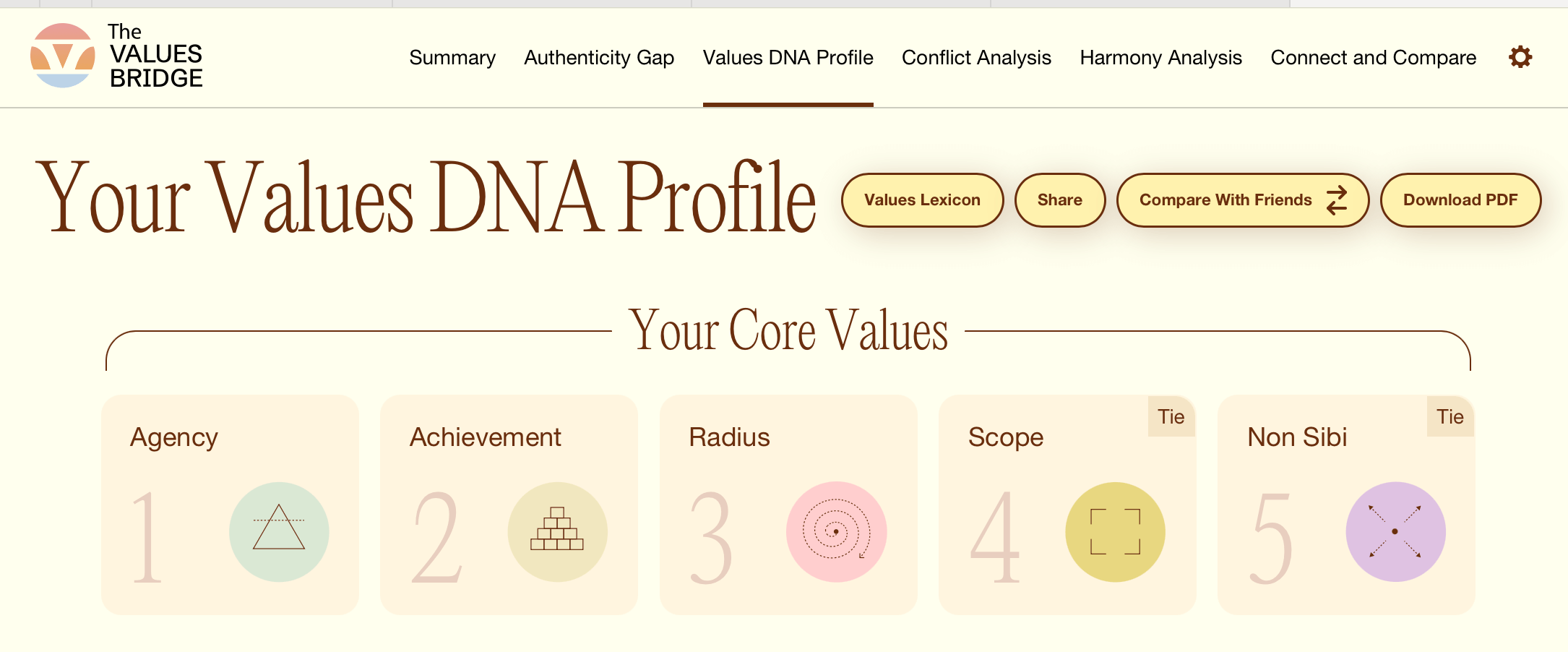
My Core Value Assessment: The Values Bridge nailed what I could not articulate.
Many people assume that if something feels wrong, they must be doing something wrong.
But what if the feeling is not a problem to fix, but information to understand?
This is where the Values Bridge becomes essential.
How Your Values Explain Why Life Feels Misaligned
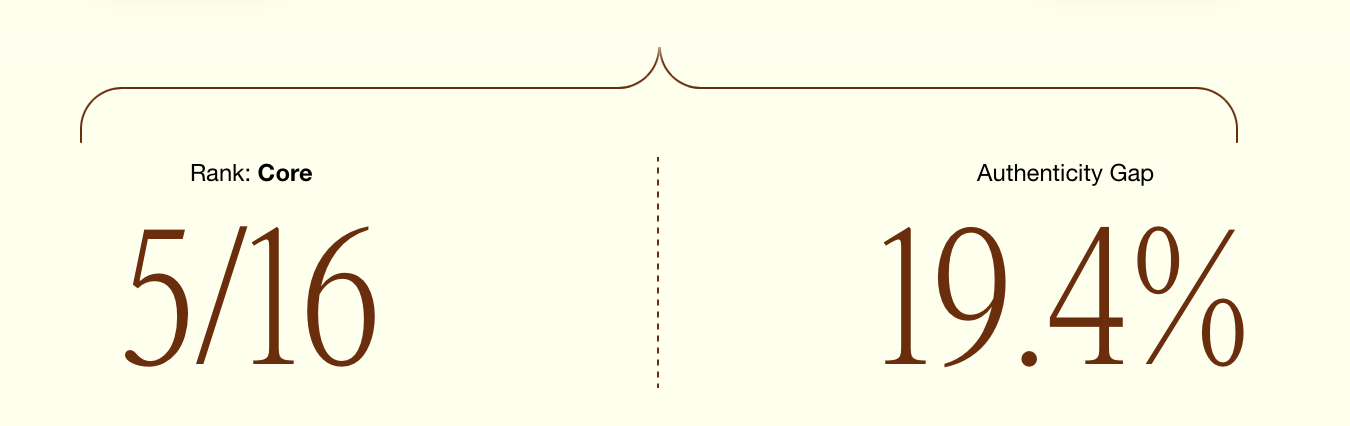
The questions on the Values Bridge assess what you value and how well your current life situation aligns with these values.
The Values Bridge helps you identify what genuinely matters to you and how closely your current life reflects that.
Not in theory. In practice.
Most people can list values easily. Family. Freedom. Health. Growth. Meaning. Connection. But knowing your values and living them are not the same thing.
The Values Bridge asks a more revealing question.
Is your life actually making space for what matters to you?
This is where many people experience a moment of clarity.
For example:
• You value freedom, but your calendar feels suffocating
• You value connection, but most relationships feel rushed
• You value creativity, but your days are repetitive
• You value balance, but your life rewards constant availability
Nothing is wrong with you. You are not unmotivated or failing.
You are simply out of alignment.
Understanding the Gap Between Your Values and Your Life
That space between what matters to you and how you are living is the gap.
Most people experience the gap as frustration, guilt, or confusion. They wonder why motivation comes and goes or why success feels strangely hollow.
The gap is not a flaw. It is feedback.
It shows you where your life has drifted away from who you really are.
Why Values Alignment Matters More Than Willpower
Without understanding values, people often try to fix the wrong thing.
• They push harder in environments that drain them
• They chase goals that do not truly matter to them
• They judge themselves for feeling unfulfilled
When values are clear, the focus changes.
Instead of asking what I should fix, people begin asking what am I not honouring.
That question changes everything.
Using Values and the Life Wheel Together for Clarity

Starting with your What and Why
You reflect on your life, reconnect with what matters, and realign your choices.
This is why the Life Wheel and the Values Bridge work best together.
The Life Wheel shows the symptoms.
The Values Bridge reveals the cause.
This is why the Life Wheel and the Values Bridge work best together.
The Life Wheel shows the symptoms.
The Values Bridge reveals the cause.
A low work score might not be about workload. It might be about meaning.
A low health score might not be about discipline. It might be about self-respect.
A low fun score might not mean you need a holiday. It might mean you stopped prioritising joy.
Together, these tools turn vague dissatisfaction into understanding.
Finding Alignment Without Overhauling Your Life
You do not need to change everything at once.
Start small.
• Notice which areas of your Life Wheel feel lowest
• Reflect on which values are not being expressed there
• Ask what one small shift could bring things back into alignment
Alignment is not a destination. It is an ongoing practice.
Life changes. Priorities shift. Wheels wobble. That is normal.
What matters is paying attention.
When Feeling Stuck Is Actually Useful Information
Feeling stuck is rarely a sign that you are failing.
More often, it is a sign that something important is being ignored.
The discomfort is not there to punish you. It is there to guide you.
How to Get Started
You do not need to overhaul your life to begin closing the gap. You just need a starting point and a bit of honesty.
Start by giving yourself permission to notice without judging.
Begin with the Life Wheel. Take ten quiet minutes and rate each area of your life as it feels right now. Not how it should feel. Not how it looks to others. Just how it feels to you. Pay particular attention to the lowest areas, not as problems to fix, but as places asking for curiosity.
Next, reflect on your values. Ask yourself what genuinely matters to you when you feel most like yourself. Then ask a harder question. Where are those values being lived right now, and where are they being squeezed out by habits, expectations, or busyness?
This is where the gap starts to come into focus.
From there, keep it small. Alignment does not come from dramatic change. It comes from small, intentional shifts.
You might try:
• Creating space in your week for one value that has been missing
• Saying no to one commitment that drains more than it gives
• Adjusting how you approach one low-scoring area rather than trying to fix everything
• Noticing where you are pushing through when you could pause instead
The goal is not perfection. It is awareness.
When you begin to notice where your life and values are out of sync, you stop blaming yourself for feeling off. You start listening instead.
That is how real change begins. One honest insight at a time.
Want to go deeper?
If this reflection has stirred something, you might enjoy exploring how values, reflection, and fresh starts connect.
Read more: New Year New You: A Life Coaching Approach to Resetting What Matters