How Taylor Swift, Rihanna, and Reese Witherspoon Built Empires—And What You Can Learn From Them

Turn Inspiration into Action. Build Your Business Acumen.
You can enjoy Taylor Swift’s music without studying her business model. You can buy Rihanna’s makeup without thinking about market gaps. And you can pick up a Reese’s Book Club recommendation without considering the business thinking behind connecting readers, authors, and screen storytelling.
But put these three women in an imaginary mentoring room, and the conversation gets interesting.
How do you turn talent into lasting value? When should you expand beyond what people already know you for? And how do you move from doing the work to shaping the opportunities?
These are questions worth asking whether you run a business, lead projects, or want more influence at work.
What Is Business Acumen, Really?
Business acumen means understanding how an organization creates value and using that understanding to make better decisions.
Who is the customer? What do they need? Where does the money come from? What does delivery cost? What risks are we taking? What makes one option better than another?
You do not have to become an accountant overnight. But if you can explain how your work improves revenue, reduces costs, manages risk, or helps customers, you can make a stronger case for your ideas.
That is where mentoring becomes powerful. A mentor can help you connect what you do with why it matters commercially.
Taylor Swift: Know Your Audience and Understand Ownership
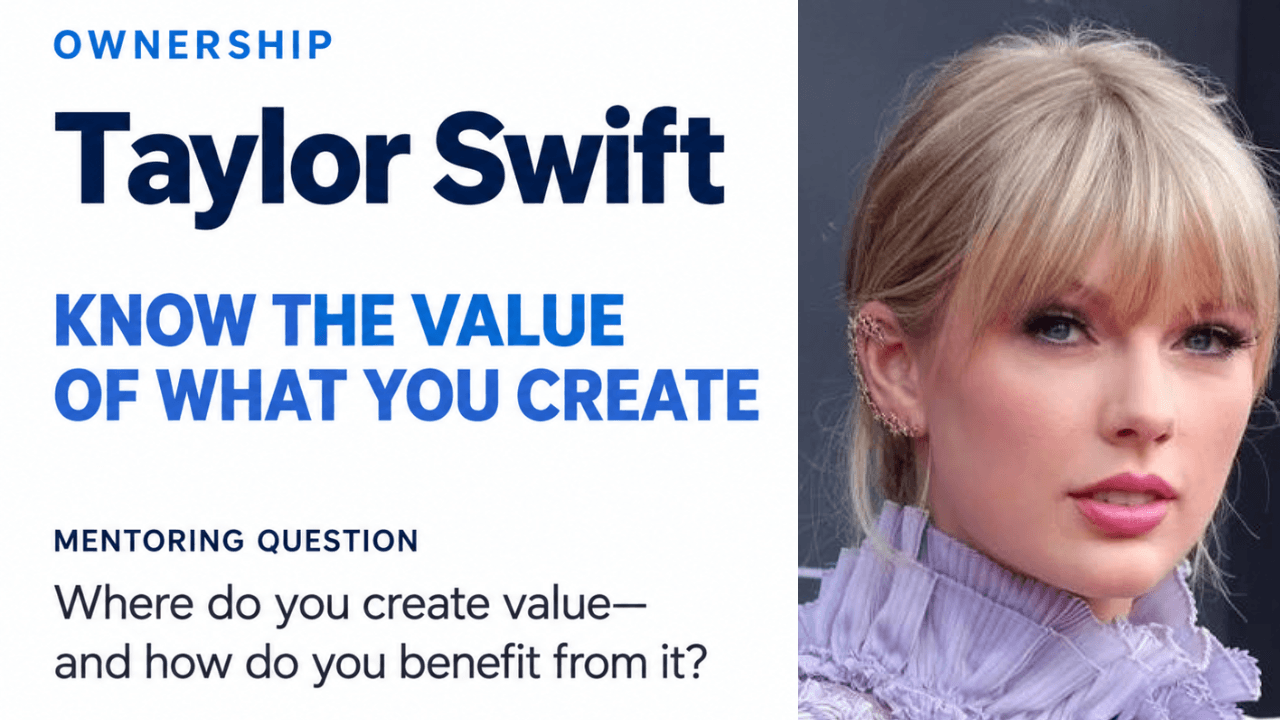
“All of the music I’ve ever made… now belongs… to me.”
- Taylor Swift
Taylor Swift shared these words when announcing her masters acquisition in May 2025. Swift’s work offers a useful example of layered marketing. Recorded music, live performances, film, and merchandise create different ways for people to engage with the same creative world.
In 2023, her Eras Tour concert film brought the experience into movie theaters, with AMC also serving as its distributor. The lesson I draw is that one core strength can support several related offers. A customer who cannot attend an event might buy a film ticket. Someone who discovers the music might later want the live experience.
You can apply that thinking on a much smaller scale. A consultant might turn recurring client questions into a workshop. A mentor might turn a useful exercise into a workbook. A project team might offer different levels of support for different user needs. Each offer should solve a problem. More products also mean more work and cost. Swift’s ownership story adds another lesson. After releasing four rerecorded albums, she acquired the original masters of her first six albums in May 2025.
That is a reminder to understand the agreements behind your work. For a business owner, this might mean intellectual property or licensing. For an employee, it might mean understanding responsibilities, recognition, and how contributions are evaluated.
Mentoring questions
Where does my work create the most value?
What could I offer in a different format to meet another customer need?
What agreements or commercial terms do I need to understand better?
Try this
Choose one thing you already do well. Write down who benefits, what problem it solves, and one related offer you could test. Estimate the extra effort before you commit.
Rihanna: Look Closely at Who Is Being Overlooked
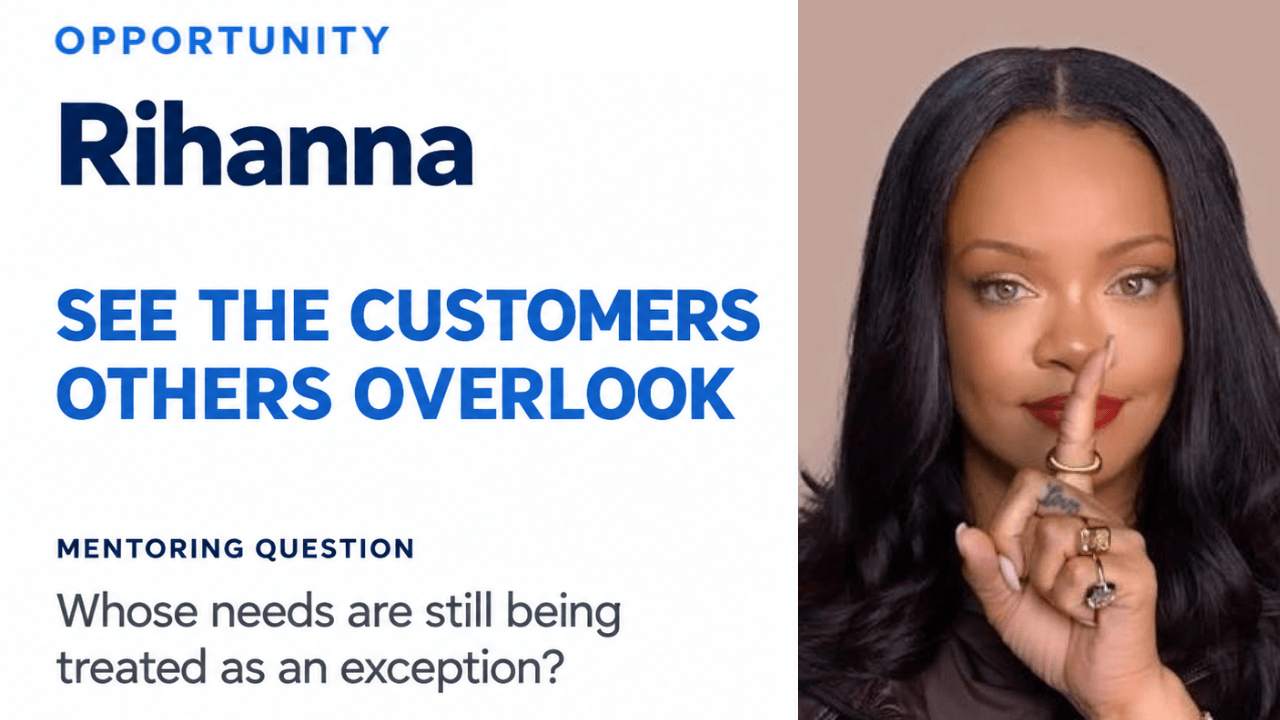
“It was also important that every woman felt included in this brand.”
- Rihanna
Rihanna explained this priority in her 2017 interview with TIME. Fenty Beauty launched that year with 40 foundation shades, making inclusion visible in the product range. Rihanna expanded beyond music into beauty, skincare, and lingerie. Her journey provides a useful example of building business opportunities beyond an original career identity.
For your own career, look for the people whose needs keep getting treated as an exception. The client who struggles with your standard process. The colleague who cannot use the training format. The customer who keeps inventing a workaround. Those frustrations are clues. Investigate them before deciding you have found a market.
There is also a useful lesson in changing direction. Rihanna’s separate luxury Fenty fashion venture was suspended in 2021, while the wider business focus shifted toward beauty, skincare, and lingerie. Business judgment includes reassessing where your resources will do the most good. You can be ambitious and still decide that an idea needs to pause.
Mentoring questions
Who struggles with the way we currently serve customers?
What am I assuming about their needs?
What evidence would justify investing in a solution, or stopping one?
Try this
Speak to three people who struggle with a current product or process. Ask what they do instead, what that costs them, and what an improvement would need to achieve. Listen before pitching your idea.
Reese Witherspoon: Move from Playing the Role to Creating the Opportunity
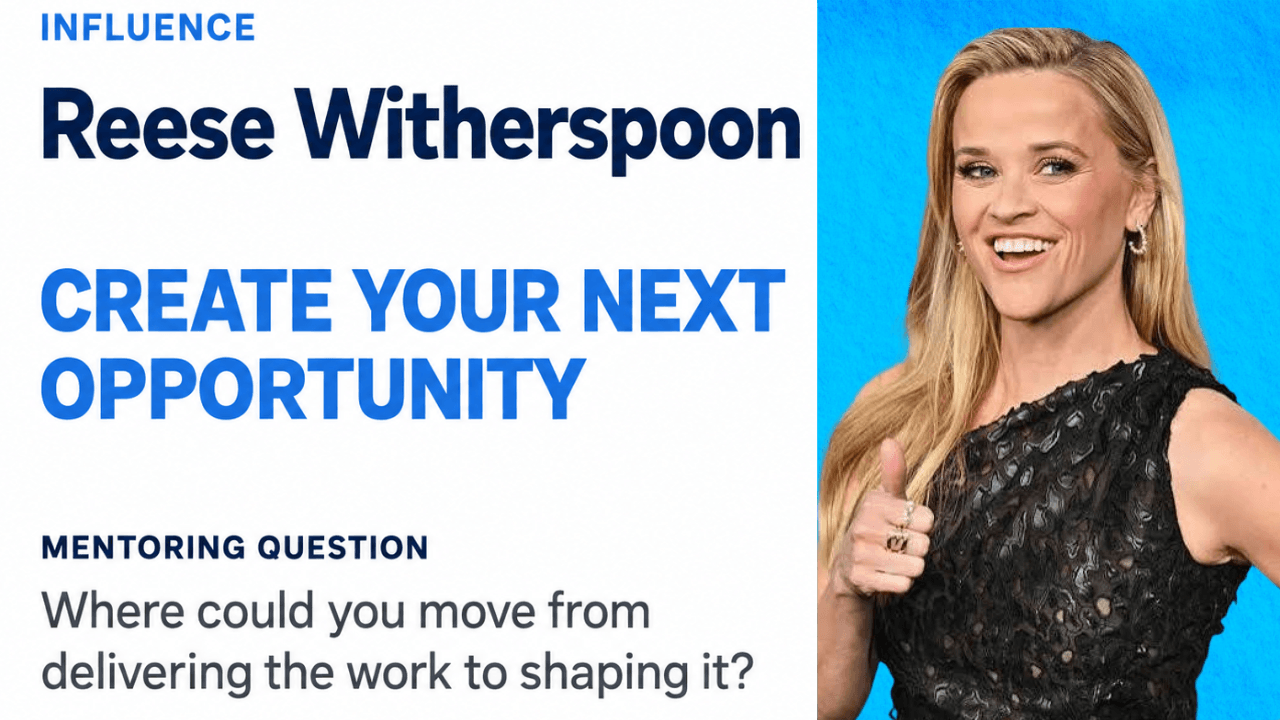
“I believe ambition is not a dirty word.”
- Reese Witherspoon
Reese Witherspoon made this declaration at Glamour’s Women of the Year Awards in 2015. We know Reese as a movie star. Her move into producing offers a useful mentoring lesson: your experience can help you spot opportunities others miss.
In 2012, she cofounded Pacific Standard with producer Bruna Papandrea. They began acquiring books and scripts centered on women to develop into films and television. Their early films included Gone Girl and Wild. Acting and producing involve different kinds of influence. An actor helps bring a role to life. A producer helps assemble the project, from the material and rights to the creative team and business relationships needed to make it. Reese expanded her role in deciding which stories would reach the screen. Through Hello Sunshine, women-centered storytelling became the focus of a wider media business.
Then there is Reese’s Book Club. Since 2017, she has recommended books to readers, with the monthly selections placing a woman at the center of the story. Reese’s Book Club. The book club is a valuable reading community in its own right. It also fits into a wider world of authors, readers, and screen adaptations. Selections including Little Fires Everywhere and Where the Crawdads Sing became Hello Sunshine productions. That does not mean every selection is an audition for a movie. The interesting business lesson is how related activities can reinforce one another: recommending stories, building a community around them, and developing selected stories for the screen.
My takeaway is that Reese used her storytelling knowledge to broaden both her business opportunities and her ability to shape the work. A powerful career question is this: What can you see from your current role that others are overlooking? Perhaps you understand why clients keep asking for the same missing service. You could see a training gap because you mentor new colleagues. Your project experience has shown you a better way to bring teams and customers together. You might be ready to propose the initiative, build a partnership, or lead the work yourself.
Reese’s example also shows why relationships matter. Producing requires collaboration. Building something larger often means learning who can help and what each partner needs.
Mentoring questions
What opportunity can I see because of my experience?
Where could I move from delivering the work to helping shape what gets created?
Who would I need to work with, and what would make the opportunity worthwhile for them?
Try this
Bring one recurring frustration to your next mentoring session. Turn it into a short proposal: the opportunity, the audience, the value, the partners, and the first step.
Ask your mentor to challenge your assumptions and help you identify one useful introduction.
Turn Inspiration into Business Judgment
Celebrity stories can make success look cleaner than it is. These women’s achievements also involved teams, partners, resources, and circumstances that differ from our own.
We can still study specific decisions and adapt the lessons to our situation.
Taylor encourages a conversation about audiences and ownership. Rihanna helps us examine overlooked needs and thoughtful expansion. Reese shows how industry experience and a clear purpose can open the door to creating opportunities.
For your next mentoring session, bring one real opportunity. It might be a new service, a project improvement, or an idea you want your manager to support.
Together, answer five questions:
Who benefits?
What problem are we solving?
What value could it create?
What will it cost in time, money, and effort?
What evidence would help us decide?
Then choose one action and a date to review what happened.
If you are the mentor, ask your mentee to explain the business case in everyday language. Help them identify assumptions and connect them with people who understand customers, finances, or operations.
If you are the mentee, bring your curiosity. “I don’t understand how we make money from this” can start a useful conversation.
You do not need a stadium tour, a cosmetics brand, or a production company to develop business acumen.
You need a problem worth understanding, a willingness to learn the numbers, and the courage to act on what you discover.
Your Blueprint Begins Here
Which lesson will you bring to your next mentoring conversation: ownership, overlooked customers, or creating your next opportunity?
Learn from these women as you build a path that reflects your strengths, values, and ambitions. Explore how to unlock your management and leadership potential, then choose your next career move with A Woman’s Guide to Grow Your Career: 13 Smart and Slightly Sassy Moves to Get Ahead.
Bring one idea from your reading to your next mentoring conversation. What would putting it into practice look like for you?