The Top 10 Project Management Certifications Worth Getting in 2026 (And Which One You Should Get Next)
As a lifelong learner, I've always believed that one of the best investments you can make is in yourself. Throughout my career, I've earned university degrees, completed professional certifications, and taken countless courses. Not because I enjoy collecting credentials, but because every stage of my career required me to learn something new.
Formal education provides an excellent foundation. An undergraduate or graduate degree can open doors, build critical thinking skills, and prepare you for a profession. But learning doesn't end at graduation. In fact, that's when it really begins.
Technology evolves. Industries change. New ways of working emerge. The skills that made you successful five years ago may not be enough to keep you competitive today. To stay relevant, you need to keep learning.
This is where professional certifications can make a real difference. Unlike a traditional degree, certifications focus on developing specific knowledge and practical skills you can apply immediately in your job. They're often more targeted, require less time, and cost significantly less than returning to university, making them an excellent way to fill skill gaps and prepare for your next career opportunity.
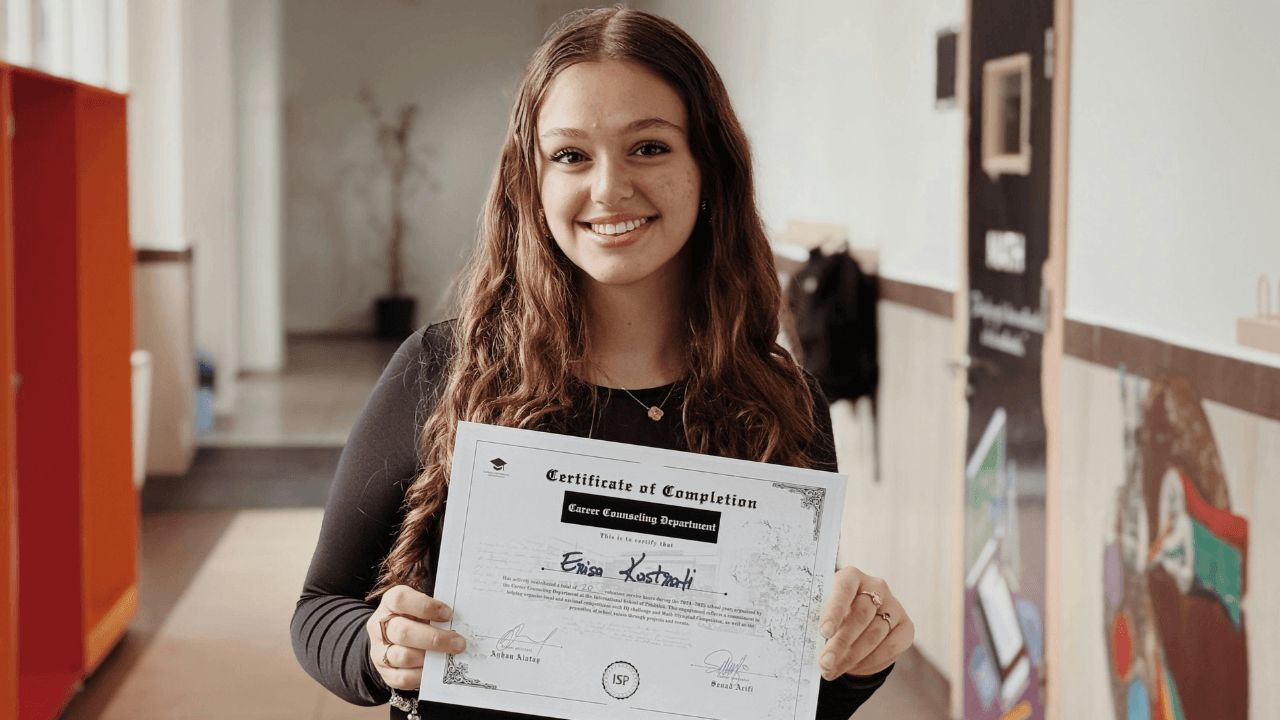
Every expert was once a beginner. Enjoy the journey.
That doesn't mean certifications replace formal education. They complement it. Think of it like this: Traditional education is the foundation of your career, and certifications are the tools that help you adapt, grow, and stay current throughout your professional life.
In this article, I'll share the ten project management certifications I believe offer the greatest value today, who they're best suited for, and how to choose the right one based on where you are in your career. Whether you're just getting started or leading large, complex projects, there's a certification that can help you take the next step.
What Is a Professional Certification?
If you’ve ever searched “Should I get another degree?” or “Which project management certification is best?” you’re not alone.
A professional certification is different from a college degree. Instead of proving what you learned over several years, a certification demonstrates that you’ve developed specific knowledge or skills in a particular discipline. Most certifications require you to pass an exam, and many also require work experience or continuing education to maintain your credential.
Think of certifications as targeted investments. Rather than learning a little about everything, they help you become better at something employers actually need.
For this list, I’m using the term certification broadly to include professional certifications and career-focused broader educational credentials that build relevant project skills.
The challenge isn’t deciding whether certifications are valuable. The real question is: “Which certification will have the biggest impact on your career right now?”
Before You Spend Any Money…
One of the biggest mistakes I see professionals make is collecting certifications simply because they’re popular.
Instead, ask yourself three questions:
Where am I in my career?
Where do I want to work?
Which skills are employers asking for?
The best certification isn't necessarily the most prestigious or the most expensive. It's the one that helps you take your next career step. Every project manager follows a different path. Someone just entering the profession needs a different set of skills than someone leading enterprise programs or managing a PMO. That's why I recommend choosing certifications based on your current experience and future goals, not someone else's career path.
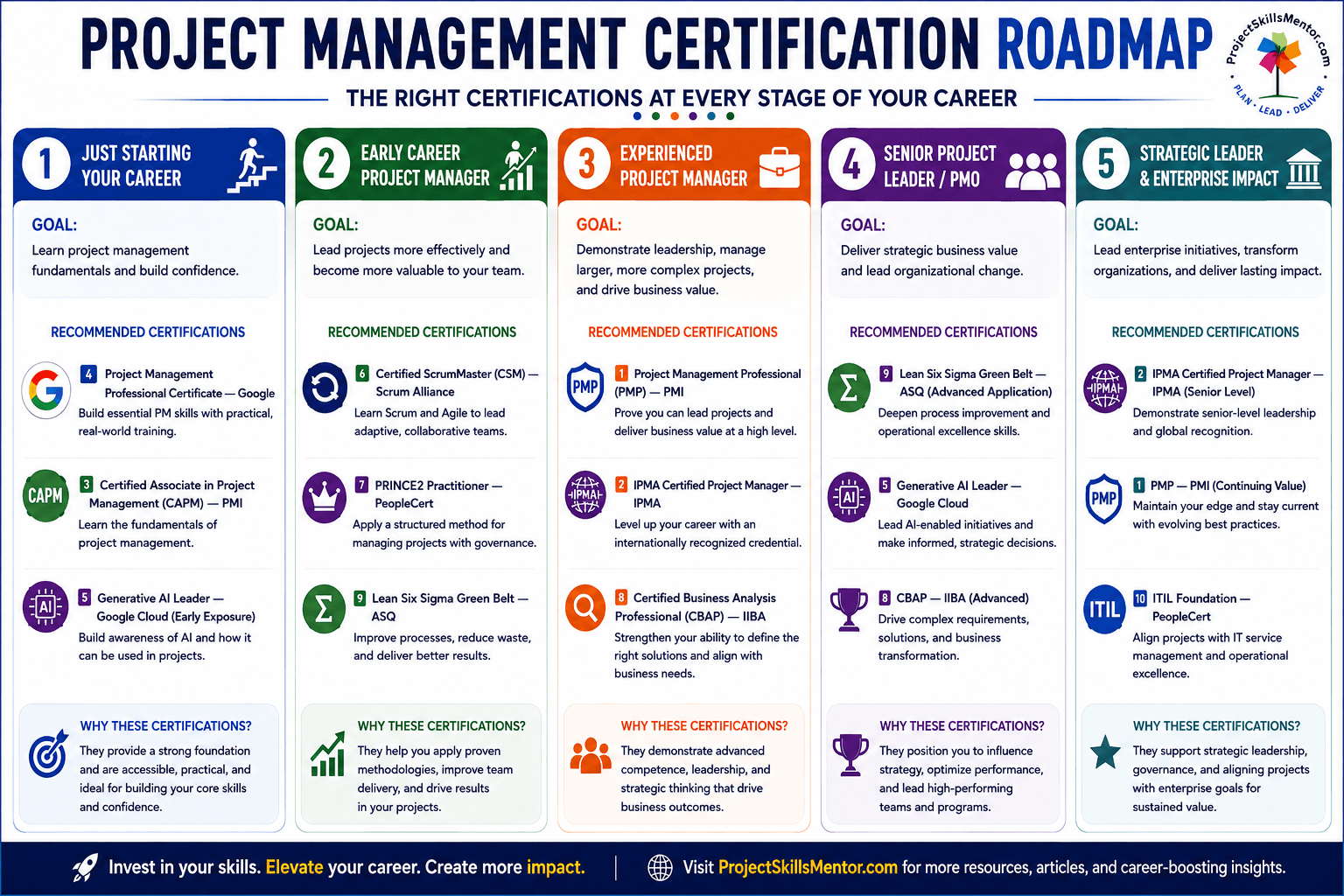
Knowing where you are in your career will determine which learning investment provides the greatest return.
Which Certification Should You Get?
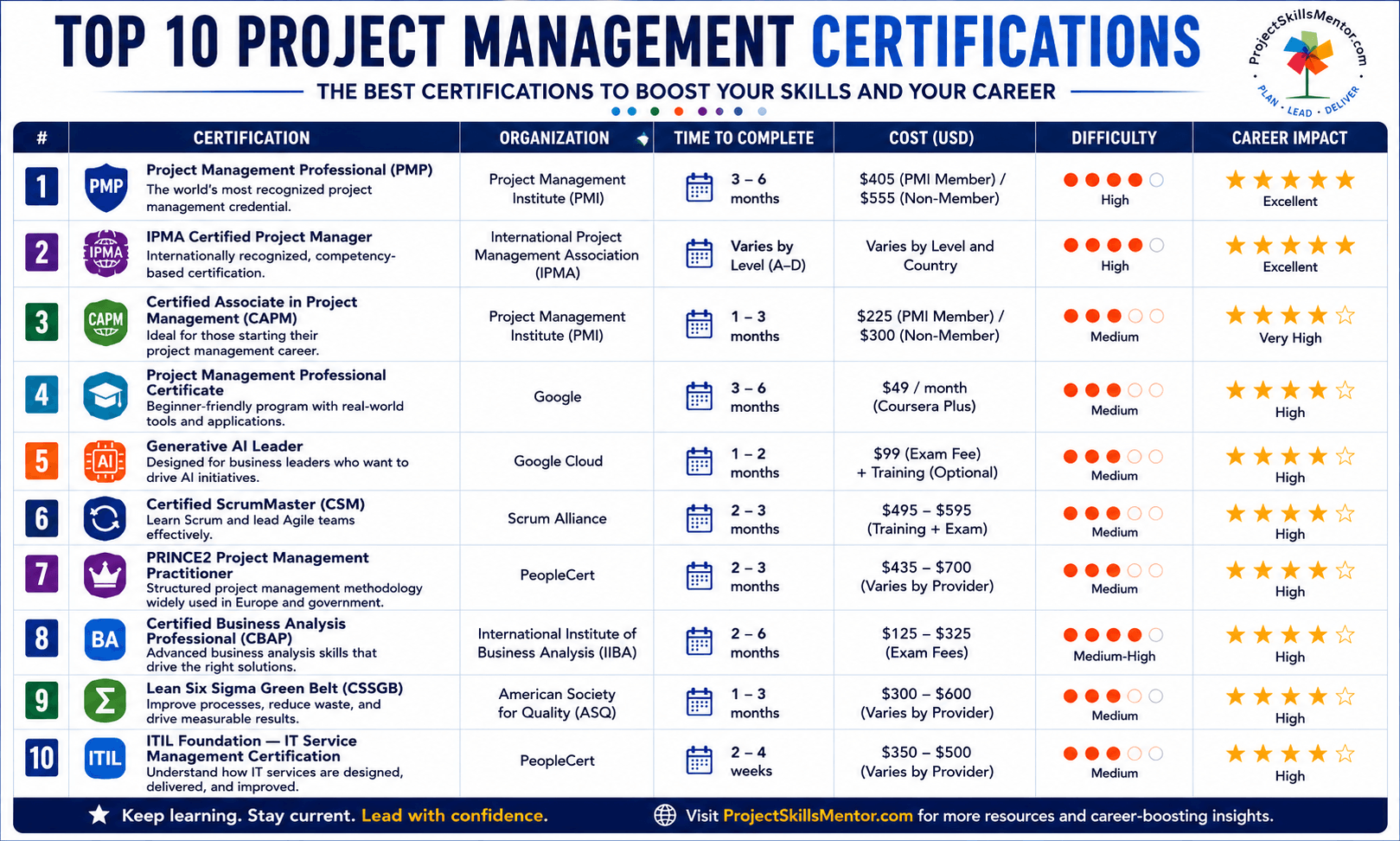
Here are my top 10. Which certification would you choose?
1. Project Management Professional (PMP) — Project Management Institute (PMI)
Certification: https://www.pmi.org/certifications/project-management-pmp
Best For: Experienced project managers leading complex projects.
Why It Matters: PMP remains one of the world's most recognized project management credentials. If you qualify, it's still one of the certifications employers ask for most often and demonstrates that you can successfully lead projects across industries.
You'll Learn: Planning and scheduling, risk management, leadership and team management, stakeholder engagement. Agile and predictive delivery methods, Business value and strategic alignment.
2. IPMA Certified Project Manager— International Project Management Association (IPMA)
Certification: https://ipma.world/certification/
Best For: Experienced project and program managers who want an internationally recognized, competency-based certification, particularly those working across Europe or global organizations.
Why It Matters: IPMA takes a competency-based approach to project management and offers four certification levels based on experience and responsibility. This makes it particularly relevant for experienced project, program, and portfolio leaders who want their certification to reflect the complexity and leadership level of their work.
You'll Learn: Project and program leadership, strategy and governance, stakeholder management, risk and opportunity management, organizational change, leadership and interpersonal competencies.
3. Certified Associate in Project Management (CAPM) — Project Management Institute (PMI)
Certification: https://www.pmi.org/certifications/certified-associate-capm
Best For: Students, recent graduates, project coordinators, and aspiring project managers with no experience.
Why It Matters: CAPM provides a strong foundation in project management principles and prepares professionals for more advanced certifications like PMP as their careers progress.
You'll Learn: Project fundamentals, planning basics, scope management, scheduling, cost management, project terminology.
4. Project Management Professional Certificate — Google
Certification: https://www.coursera.org/professional-certificates/google-project-management
Best For: Career changers and professionals entering project management for the first time.
Why It Matters: This practical, beginner-friendly program focuses on real-world project management skills and tools, making it an excellent starting point for those without formal project experience.
You'll Learn: Project planning, team communication, risk identification, stakeholder management, project documentation, popular project management tools.
5. Generative AI Leader — Google Cloud
Certification: https://cloud.google.com/learn/certification/generative-ai-leader
Best For: Project managers, program managers, and business leaders who need to understand how generative AI can be applied to real business problems.
Why It Matters: You don't need to become an AI engineer to manage projects that use AI. But you do need to understand what generative AI can do, where it creates business value, and how to have informed conversations with technical teams and stakeholders. The Google Cloud Generative AI Leader certification is designed for business professionals and does not require hands-on technical experience. It covers generative AI fundamentals, Google's generative AI offerings, techniques for improving AI outputs, and strategies for implementing successful AI solutions.
You'll Learn: Generative AI fundamentals and business value, AI use cases, prompt engineering concepts, Google Cloud generative AI offerings, improving generative AI output, responsible AI and governance.
6. Certified ScrumMaster (CSM) — Scrum Alliance
Certification: https://www.scrumalliance.org/get-certified/scrum-master-track/certified-scrummaster
Best For: Project managers working in Agile, Scrum, product development, technology, or hybrid delivery environments.
Why It Matters: Organizations increasingly expect project managers to lead teams that adapt quickly to change. The Certified ScrumMaster certification demonstrates an understanding of Scrum and helps project managers work effectively with teams using iterative planning, collaboration, and continuous improvement. The CSM can also help bridge the gap between structured project management and the more flexible, iterative ways many teams work today.
You'll Learn: Scrum framework, Agile planning, sprint management, product backlogs, team collaboration, continuous improvement.
7. PRINCE2 Project Management Practitioner — PeopleCert
Certification: https://www.peoplecert.org/browse-certifications/project-programme-and-portfolio-management/PRINCE2-2
Best For: Project managers working in government, especially in the UK and Europe, or in highly structured organizations.
Why It Matters: PRINCE2 provides a structured framework for governance, documentation, accountability, and controlled project delivery. It's especially valued in organizations with formal project management processes.
You'll Learn: Project governance, business cases, stage planning, risk and issue management, roles and responsibilities, project controls.
8. Certified Business Analysis Professional (CBAP) — International Institute of Business Analysis (IIBA)
Certification: https://www.iiba.org/business-analysis-certifications/cbap/
Best For: Experienced project managers who regularly work with business requirements, stakeholders, solution design, and business transformation.
Why It Matters: Great project management isn't just about delivering the project right—you also need to make sure you're delivering the right solution. The IIBA Certified Business Analysis Professional (CBAP) certification builds advanced skills in understanding business needs, defining requirements, analyzing solutions, and connecting project delivery to business value.
You'll Learn: Business analysis planning and monitoring, requirements gathering and stakeholder collaboration, requirements life cycle management, strategy analysis, requirements analysis and solution design, solution evaluation.
9. Six Sigma Green Belt — American Society for Quality (ASQ)
Certification: https://www.asq.org/cert/six-sigma-green-belt
Best For: Project managers and professionals focused on improving quality, reducing waste, solving process problems, and increasing efficiency.
Why It Matters: Lean Six Sigma teaches practical techniques for improving business processes and delivering measurable results. These skills complement project management by helping teams identify root causes, use data to make decisions, and improve how work gets done.
You'll Learn: Process improvement, root cause analysis, DMAIC methodology, data-driven decision-making, quality management, continuous improvement.
10. IT Service Management Certification - ITIL Foundation (PeopleCert)
Certification: https://www.peoplecert.org/browse-certifications/it-governance-and-service-management/ITIL-1
Best For: Project managers supporting IT services, operations, data centers, infrastructure, and technology teams.
Why It Matters: ITIL is a strong complement to PMP or PRINCE2 because project management teaches you how to deliver the project, while ITIL helps you understand the operational environment that receives and runs what the project delivers. ITIL helps project managers understand how technology services are designed, delivered, managed, and continuously improved, making collaboration with IT operations and service teams more effective.
You'll Learn: IT service management, incident and problem management. Change enablement, service management practices, continual improvement, customer and business value.
Beyond Project Management: Skills That Build Your Career
My Top 10 certifications can take you far, but here’s my bonus recommendation: specialize.
Project management is a highly transferable skill. The fundamentals can be applied across industries, organizations, and technologies. Being a strong generalist is valuable, but you also need to speak the language of your industry. Whether you work in data centers, financial services, healthcare, cybersecurity, cloud technology, or another specialized field. That is why I suggest you consider adding a certification that builds your industry knowledge alongside your project management skills.

Bonus: Industry-Specific Certification
Best For: Project managers who want to become experts in a specific industry or business function.
Why it Matters: The most successful project managers combine strong delivery skills with deep knowledge of the industry they serve. Domain expertise helps you communicate more effectively, make better decisions, and become a trusted advisor rather than just a project coordinator.
You'll Learn: The specific skills depend on your chosen specialization, but may include:
Cloud technologies (AWS, Azure, Google Cloud)
Digital marketing (Google, HubSpot)
User experience (UX)
Cybersecurity
Healthcare regulations
Construction management
Financial services
Manufacturing and operations
The Truth About Certifications
No certification guarantees a promotion.
No exam makes you a great leader.
No letters after your name automatically make you better at delivering projects.
But the right certification can accelerate your learning, increase your confidence, help you speak the language of your industry, and open doors that might otherwise stay closed.
The most successful project managers never stop learning. Every certification builds on the last, and together they create a toolkit that helps you deliver better projects and create more value for your organization.
Which Certification Fits Your Needs?
You don’t need to earn all ten certifications.
You only need to choose the one that’s right for where you are today.
Take an honest look at your career goals. Pick one certification that aligns with your next step, set a realistic study plan, and commit to making steady progress. Six months from now, you’ll be glad you started.
Learning is one of the few investments that pays dividends for the rest of your career.
So don’t wait for the perfect time. Start today; your future self will thank you. Let me know in the comments which certification you’re working toward.
And if you want to see other certification options I didn’t discuss here, check out this article.