

How to Lead a Project Team Through an Office Relocation
Leading a project team through an office relocation? Protect productivity, manage risk, and keep deliverables moving with a practical relocation plan.
Company Moving? Plan Your Team’s Transition
Protect Project Productivity
Plan the Office Move
Keep Teams on Track
An office relocation rarely waits for a convenient moment in the project calendar. Desks, servers, files, and people may all be moving, but the project deadlines are usually expected to stay exactly where they are. The real risk is not the move itself. It is assuming that work will continue at the same pace while everyone packs, reconnects, and learns a new environment. With a clear communication plan, including timing, impact, and contingencies, the team can keep delivering. Without one, the move can quietly consume productive time that nobody included in the schedule.
Changing the Bandstand While the Band Is Playing
This is more common than we might think. Nearly 1 in 10 publicly traded U.S. companies changed its headquarters address in one year. That figure covers headquarters address changes, not every satellite office, regional location, or project team affected by a corporate move. While it is hard to estimate how many projects are impacted by company moves, the data suggests the impact is significant. How do I know? It’s happened to me, more than once.
While leading a project for a Fortune 500 bank during a period of growth and team expansion. We were preparing to go live with five projects when the client announced that our project team was moving to another office. We had to move everything in the middle of a heatwave and 3 back-to-back go-lives.
When I worked in Silicon Valley, we also had a move during a big-bang ERP implementation. We called this “changing the bandstand while the band was playing.” The work does not stop. The deadlines do not disappear. The team must keep performing even while its working environment changes around it.
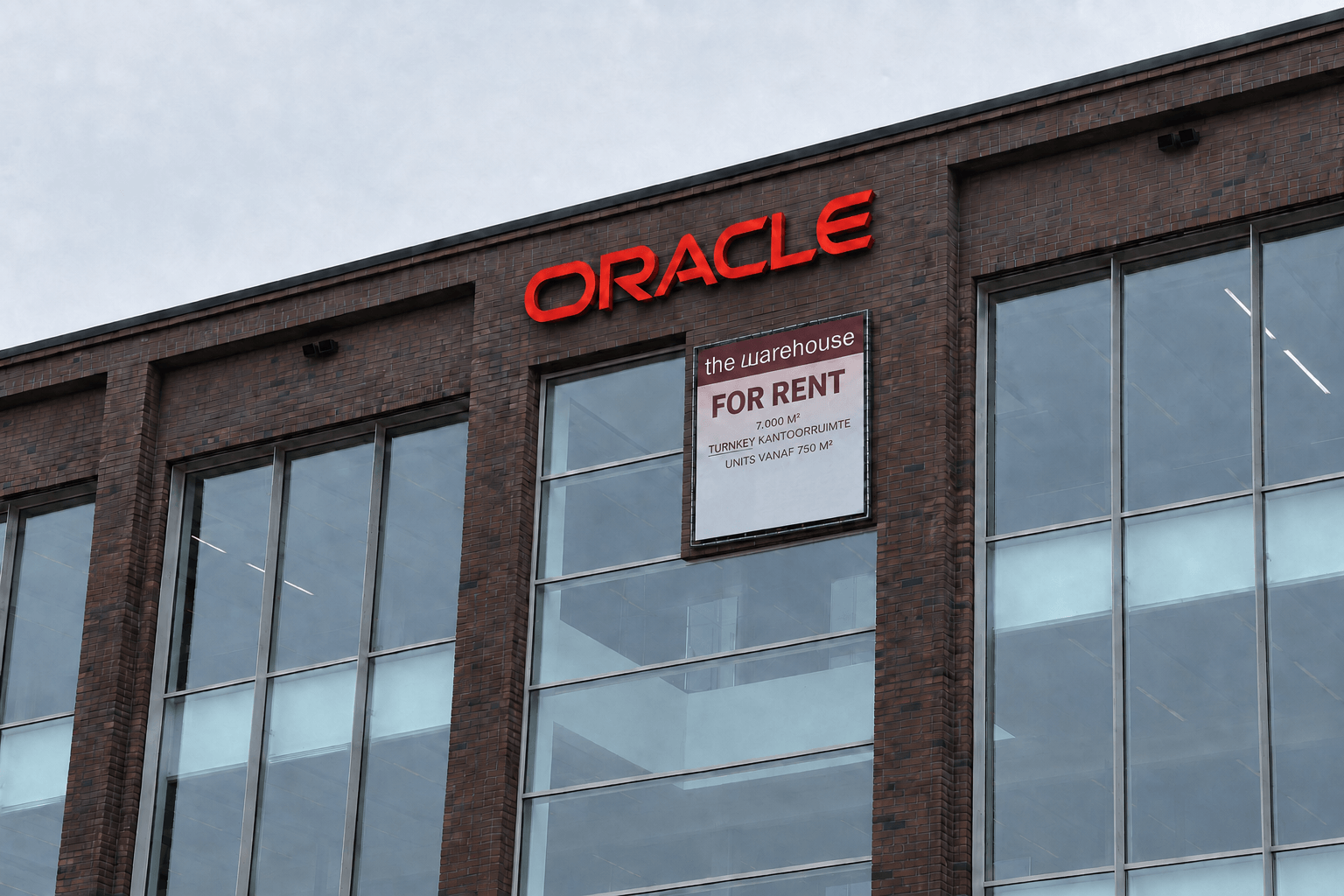
I was reminded of that experience when I recently passed the local Oracle building here in Amsterdam. I remembered the office opening less than five years ago, yet a large “For Rent” sign now hangs close to the Oracle name. It was a visual reminder that even major global companies continually reconsider where - and how - their people work.
For a project manager, an office relocation is never just a facilities issue. It can affect technology, security, access, team communication, productivity, morale, commuting arrangements, vendor coordination, and the delivery schedule. The band still has to play. Our job is to help everyone keep playing together, even when someone moves the bandstand.
Why Does an Office Relocation Put Project Productivity at Risk?
An office move disrupts far more than furniture. Focus scatters when people do not know where they will sit, whether their equipment will arrive safely, or whether the new space has the rooms and technology the team depends on. Those questions add friction to work that has nothing to do with the move. Momentum is fragile on any project, and relocation can break the team’s rhythm before the schedule shows the damage. The answer is not to pretend there will be no disruption. Treat the relocation as a mini project with a clear owner, plan, risks, dependencies, and communication cadence.
What Belongs in an Office Relocation Communication Plan?
A relocation communication plan needs the same discipline as any stakeholder communication plan. Team members should know the moving dates, what they must pack, what the movers will handle, when systems will be unavailable, where they should work during downtime, and whom to contact when something goes wrong. Vague updates create more anxiety than clear bad news. A practical project manager’s toolkit can help structure the plan around four essentials: audience, message, timing, and channel. Keep the current schedule in one visible place instead of burying it in an old email thread. When people know what happens next, they can focus on delivery instead of speculating about the move.
Project Skills Mentor Tip: Build every relocation update around four elements - audience, message, timing, and channel.

How Do You Add an Office Move to the Project Timeline?
An office relocation is a project milestone, so give it the same scrutiny as any other major event. Add the move to the master timeline early. If you influence the date, look for a natural pause between major deliverables instead of the week before a launch or client presentation. Lease overlap, vendor availability, IT readiness, weather, and workload can all affect the decision. Choosing the right time to relocate can mean the difference between a controlled transition and a move layered onto an already demanding sprint. Treat the relocation date as a milestone with dependencies, entry criteria, and a recovery period - not as an administrative note on the calendar.
Project Skills Mentor tip: Put the move date into the project plan early. Do not try to work around it later.
How Should a Project Manager Plan for Relocation Staffing Gaps?
Leading a project team through an office relocation also means planning for temporary staffing and productivity gaps. Team members may lose time to packing, IT setup, furniture adjustments, commuting changes, or simply learning the new office. Build that flexibility into the resource plan before people fall behind. This is a good time to revisit effort estimates, arrange temporary coverage, and identify the tasks that genuinely cannot slip. My guide on planning a successful project can help you check the plan, roles, timing, and risks. A little flexibility before the move can prevent a much larger scramble during relocation week.
Project Skills Mentor tip: Plan for staffing gaps before the move instead of discovering them in the middle of a sprint.
What Happens When an Office Move Delays the Project?
Even a well-planned relocation can push a deadline. That does not automatically mean the project has failed. What matters is how quickly you acknowledge the impact, make decisions, and reset expectations. My practical, no-drama playbook for when a project timeline slips can help you identify what changed, quantify the delay, agree on priorities, and present a credible recovery schedule. Stakeholders are much more likely to accept an early, clearly explained adjustment than a last-minute surprise. Name the issue, show the effect, and bring a plan - not just an apology.
How Much Productivity Can Teams Lose During an Office Relocation?
Office relocation can create measurable productivity loss. An Applied Ergonomics study of relocation to activity-based workplaces found that employees’ perceived productivity declined after the move and that the effect was still visible a year later. Change-oriented leadership helped reduce the impact. That matters for project managers because the way we lead the transition can influence how quickly the team regains its rhythm. Clear direction, frequent communication, visible structure, and practical support are not “soft extras.” They are part of the productivity plan.
How to Maintain Project Continuity During an Office Move
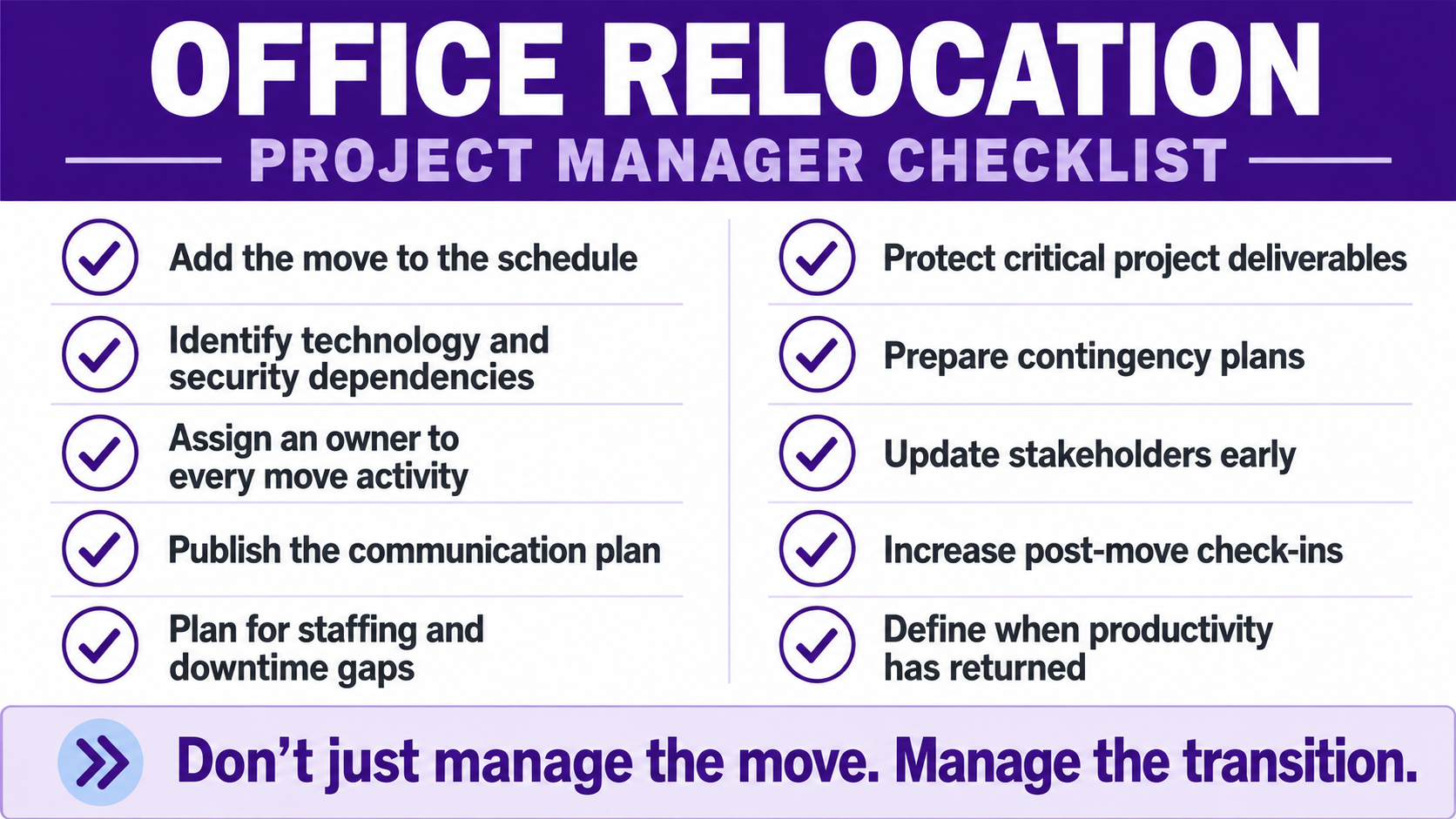
Use this checklist to start planning your team's office transition.
Leading a project team through an office relocation without losing productivity comes down to treating the move as a real project risk and transition. Put it on the plan, identify the dependencies, prepare for downtime, adjust staffing, and communicate faster than the rumor mill. The goal is not to pretend the move will have no effect. The goal is to understand the effect early enough to manage it. Start by adding the relocation to the master timeline this week - not after the boxes arrive. Every update to the team is part of the project plan, not an interruption to the “real work.”
When the Move Affects You Personally
Sometimes an office relocation changes where the team works. Other times, the move goes further and asks you to relocate your career, home, and life. That creates two critical paths: managing the practical move while protecting your professional momentum.
If you are considering moving for a new role or assignment, read my related article, The Hidden Project Plan Behind Every Successful Career Relocation. It shows how to approach career relocation like a project, with phases, milestones, dependencies, risks, and a plan for rebuilding your network in a new location.
Whether the company, the project team, or you are moving, the lesson is the same: do not just manage the move. Manage the transition.